





What is the best flooring for Australian family homes?
In most busy households with kids and pets, laminate flooring, hybrid flooring and luxury vinyl planks tend to perform best. But there isn’t one universal answer. The right choice depends on how you live, your climate, how much traffic your floors handle, and how your home is built.
When people search for the best flooring or compare different flooring options, they’re usually hoping for a simple, one-size-fits-all answer. The reality is that the best type of flooring for one family may not be the right solution for another, especially when you factor in pets, teenagers, coastal humidity or heavy daily foot traffic.
In our experience, most flooring problems aren’t product faults. They happen when the house flooring doesn’t match the way the home is actually used.
The best flooring isn’t about what looks impressive on a sample board in a showroom. It’s about what still looks good five to ten years later in a real family home. That’s what this guide is designed to help you understand when comparing home flooring and weighing up different flooring materials.
Before You Decide
- There is no one-size-fits-all best flooring
- Laminate performs best for scratch and impact resistance
- Vinyl performs best for moisture and pet-related spills
- Hybrid offers better comfort and reduced structural noise
- Timber delivers the strongest long-term resale appeal
- Floating floors handle slab movement better than bonded floors
- Installation quality and subfloor preparation influence long-term performance
Is There Really a “Best” Flooring for Family Homes?
The way to answer this is with another question: how do you live?
Because the answer changes depending on:
- Whether you’ve got young kids
- Whether you’ve got pets
- How much natural light the home gets
- Whether you’re on a concrete slab
- How long do you plan to stay in the property
A family planning to live in their home for twenty years will make very different decisions compared to someone renovating for resale in five. This is one of the most common mistakes we see. House flooring often gets chosen based on how it looks in a showroom instead of how it will perform under daily pressure in a real family environment.
Hardwood timber is a good example. Many people assume solid timber is indestructible and automatically the best flooring for long-term durability. But what you actually walk on is the protective coating on top of that timber. That coating can scratch, dent or wear depending on traffic, pets and maintenance. The same applies to other flooring materials like vinyl, laminate or hybrid products, but each one still has its own share of potential problems.
When installed in the right environment, they perform well. When installed in the wrong one, problems show up quickly. The real goal isn’t choosing the most expensive option or following what’s currently the most popular flooring in new homes. It’s choosing the right home flooring for your conditions, your layout and the way your household actually lives.
The Most Practical Flooring Options
We’ve seen beautiful house flooring installed in brand-new homes that looked perfect on handover day and struggled within a few years because it wasn’t suited to slab movement, pets, heavy traffic or direct sunlight. We’ve also seen mid-range home flooring materials perform exceptionally well for over a decade because they were chosen properly and installed correctly.
That’s the difference when comparing flooring options properly. It’s not about chasing what’s trending or assuming the most expensive product is the best flooring. It’s about matching the product to the environment.
When narrowing down house flooring options for busy Australian households, we typically focus on four main categories that consistently deliver strong performance in modern house flooring:
- Laminate flooring
- Luxury vinyl plank (LVP)
- Hybrid flooring
- Timber flooring
Each of these flooring options has strengths. Each has limitations. The key is understanding where they perform best within your home.
Laminate Flooring

Airstep Adare Laminate
If durability is your priority, laminate is often the strongest performer in a family home.
Modern laminate has come a long way from what people remember from twenty years ago. The surface layer, typically a melamine wear layer, is extremely hard. That makes it very resistant to scratching and impact.
In homes with kids, that matters. Toys get dragged across the floor. Chairs pushed back roughly. School bags dropped in hallways. All of this creates friction and impact over time. Laminate handles better than most flooring materials in its category.
Why Laminate Performs Well in Family Homes
The structure of laminate flooring includes a dense core and a tough wear layer. When installed as a floating floor with underlay, it allows for slight movement beneath the surface. That flexibility becomes important in homes built on concrete slabs. Concrete slabs expand and contract slightly over time. Rigid bonded flooring systems don’t always tolerate that movement well. Floating laminate systems generally cope better because they aren’t glued directly to the slab. This reduces stress on the boards and lowers the risk of cracking or lifting, which is why laminate remains one of the more practical flooring options for many Australian homes.
Long-Term Appearance
After five to ten years in a busy family home, laminate often shows less visible wear compared to other home flooring options. That doesn’t mean it’s waterproof. If moisture penetrates the joints and reaches the core, it can cause swelling. That’s why laminate isn’t always the best type of flooring for areas with frequent standing water or repeated pet accidents. But in dry, high-traffic zones like living areas and hallways, it continues to be one of the most consistent long-term performers among modern house flooring choices.
Noise Considerations
Laminate can produce slightly more perceived sound underfoot compared to hybrid flooring. That doesn’t mean it’s excessively loud, but in open-plan house flooring layouts, it can be noticeable. In bedrooms or upstairs areas, some families prefer a softer feel and quieter footfall. At that point, the decision becomes less about what’s considered the best flooring overall and more about matching the right home flooring to the way the space is actually used.
When Laminate Is a Strong Choice
- High-traffic living areas
- Homes with active kids
- Owners planning to stay long-term
- Renovations where slab movement is a consideration
- dry areas
Choosing laminate doesn’t mean compromising on appearance. Modern ranges replicate timber extremely well. But the real advantage is how it handles daily wear. In most family homes, daily wear is what matters most when comparing house flooring options.
Luxury Vinyl Plank (LVP)
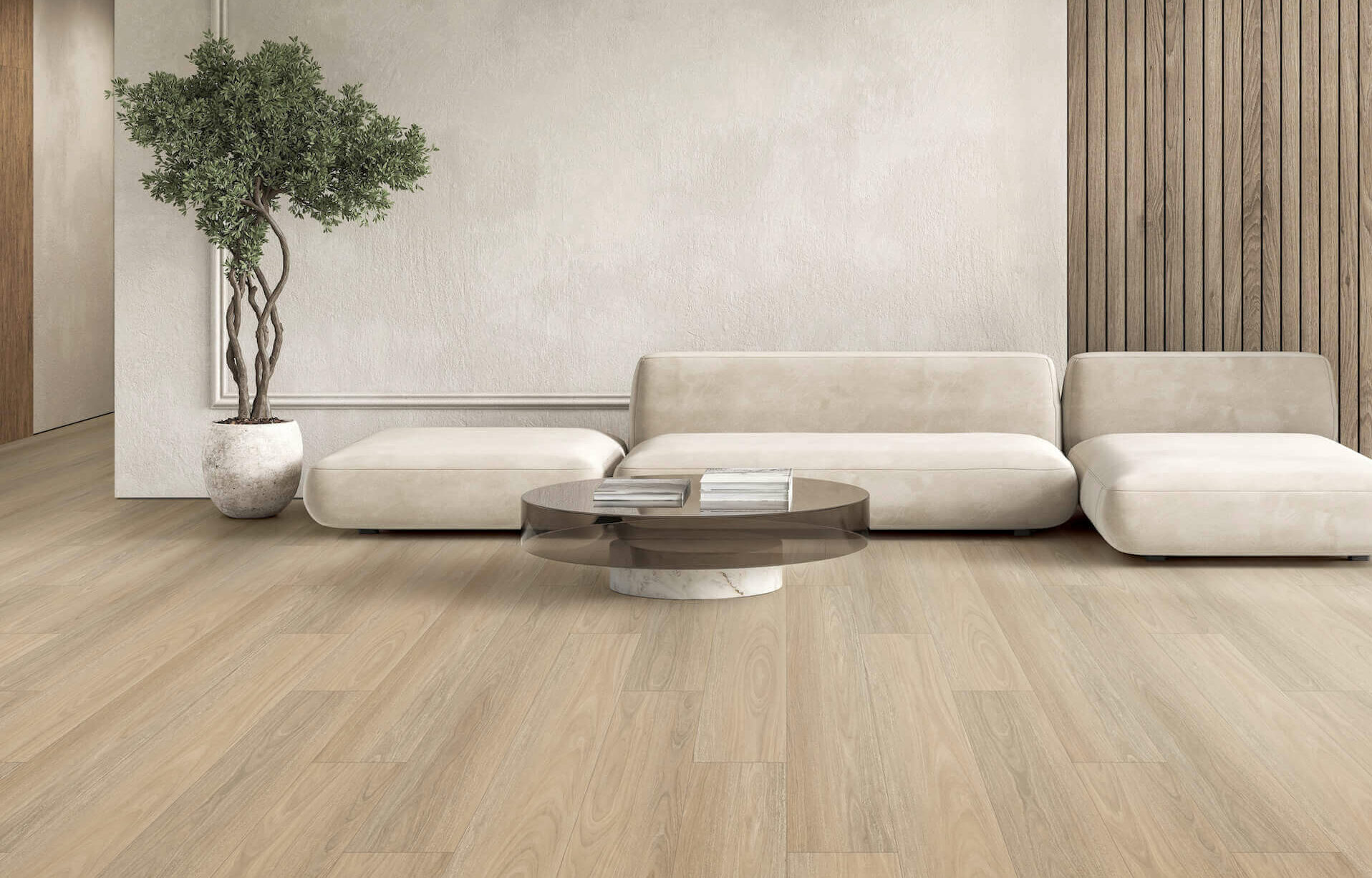
Heritage luxury vinyl planks installed in a high class home.
If moisture is your main concern, luxury vinyl planks ar often the safest option. Unlike laminate or timber, vinyl is completely waterproof. The core itself is non-porous, which means water won’t cause swelling in the way it can with other floating products.
Why Vinyl Performs Well in Busy Homes
In family homes, spills are inevitable. Water bottles get knocked over. Kitchen splashes happen. Pet accidents occur.
With vinyl, moisture doesn’t penetrate the plank itself. You still need to clean spills promptly, but you’re far less likely to experience core damage compared to laminate. Vinyl also has a slightly softer feel underfoot than laminate. That can make it more comfortable in large open-plan areas where people are standing for longer periods. Among modern home flooring materials, vinyl is often considered the most forgiving for moisture-prone areas.
Where Vinyl Is Most Suitable
- Kitchens
- Hallways
- Living areas
- Homes with pets
- Areas prone to occasional spills
It’s also relatively easy to clean, which matters in busy households.
Repair Considerations
There is one limitation worth understanding. Many vinyl installations are glued down rather than floated. If a plank is damaged, it isn’t as simple as lifting a board and replacing it. Sections often need to be carefully cut out and re-glued.
It’s not impossible to repair, but it’s more involved than swapping out a floating board.
Slab Movement
Vinyl performs moderately well with slab movement, but glued systems are more rigid than floating floors. In homes built on concrete slabs, which is common in Western Australia, this is something to factor in. Movement may be minor, but over time, it can place stress on bonded systems. Vinyl is extremely practical. But like all flooring materials, it works best when installed in the right environment.
Hybrid Flooring
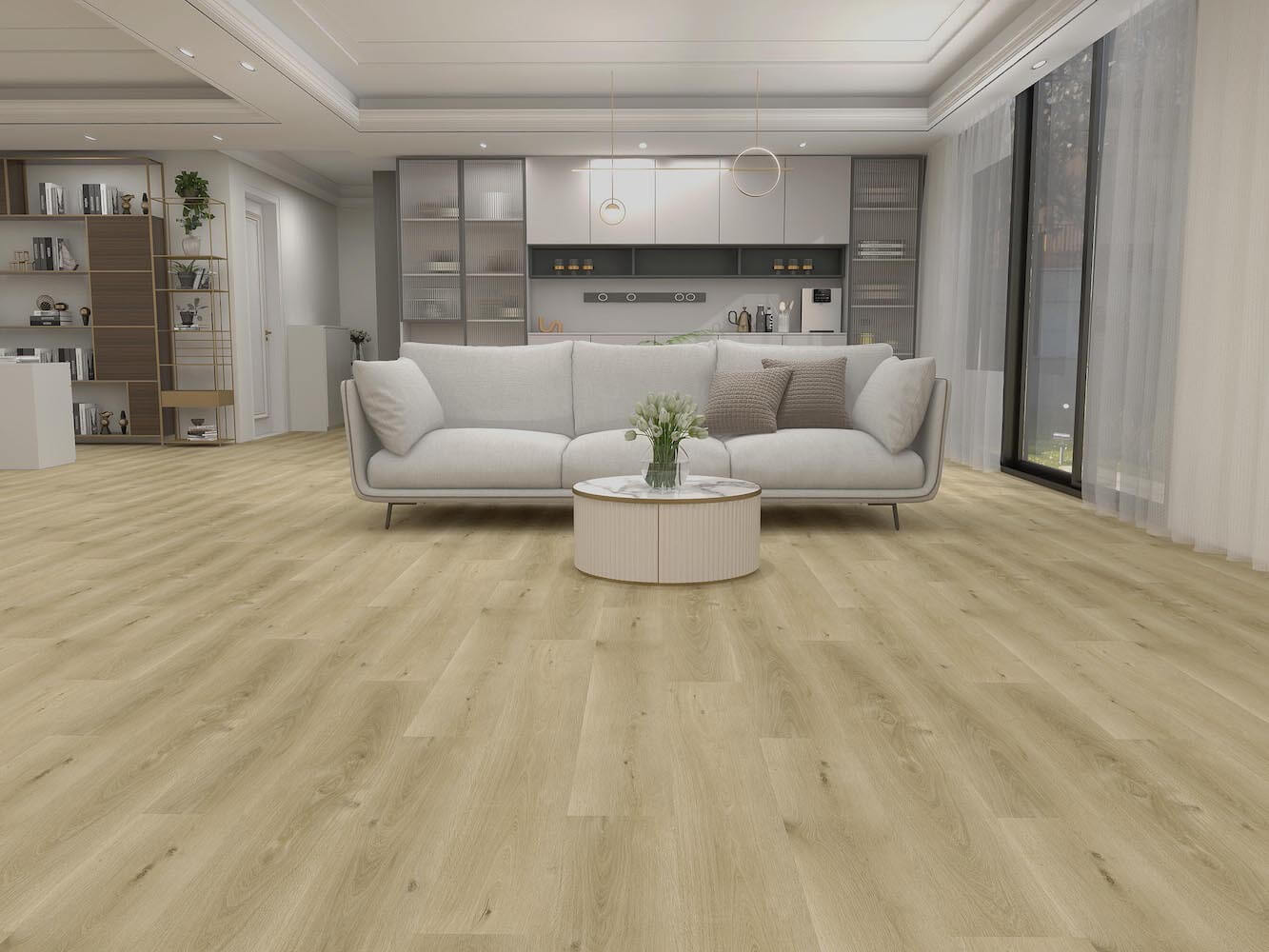
Airstep Ikoma Hybrid Flooring Windsor Oak
Hybrid flooring sits between laminate and vinyl in many respects. It combines a rigid core with a durable wear layer and is typically installed as a floating floor. Many families choose hybrid because it offers a balance between durability, moisture resistance and comfort.
Comfort and Noise
Hybrid flooring is generally quieter underfoot than laminate. Its construction and integrated underlay system tend to reduce structural noise transmission, which makes it popular in upstairs areas and open-plan homes. For families weighing up different flooring options, this can be a deciding factor. If perceived sound is a concern, hybrid is often the more comfortable home flooring choice.
Water Resistance
Hybrid flooring is water-resistant and, in many cases, marketed as waterproof. However, not all products are equal. Higher-quality hybrid products perform very well in family homes and are often promoted as one of the best flooring solutions for busy households. Lower-quality, thin hybrid boards can struggle in hotter Australian climates, particularly in areas exposed to direct sunlight.
Heat and Expansion Risks
This is one of the biggest issues we see with cheaper hybrid flooring. Thin boards with heavy wear layers can be susceptible to heat expansion. Over time, expansion pressure can stress the locking joints and lead to lifting or joint failure.
Direct sunlight through large glass doors increases this risk. That doesn’t automatically rule hybrid out as the best type of flooring for a home, but it does mean product quality and installation matter. When chosen carefully and installed correctly, hybrid performs very well in modern house flooring layouts, particularly in open-plan living spaces.
Where Hybrid Is a Strong Fit
- Open-plan homes
- Upstairs living areas
- Families wanting reduced noise
- Homes needing moderate moisture resistance
The key is choosing a mid-tier or higher product that can tolerate Australian conditions.
Timber Flooring
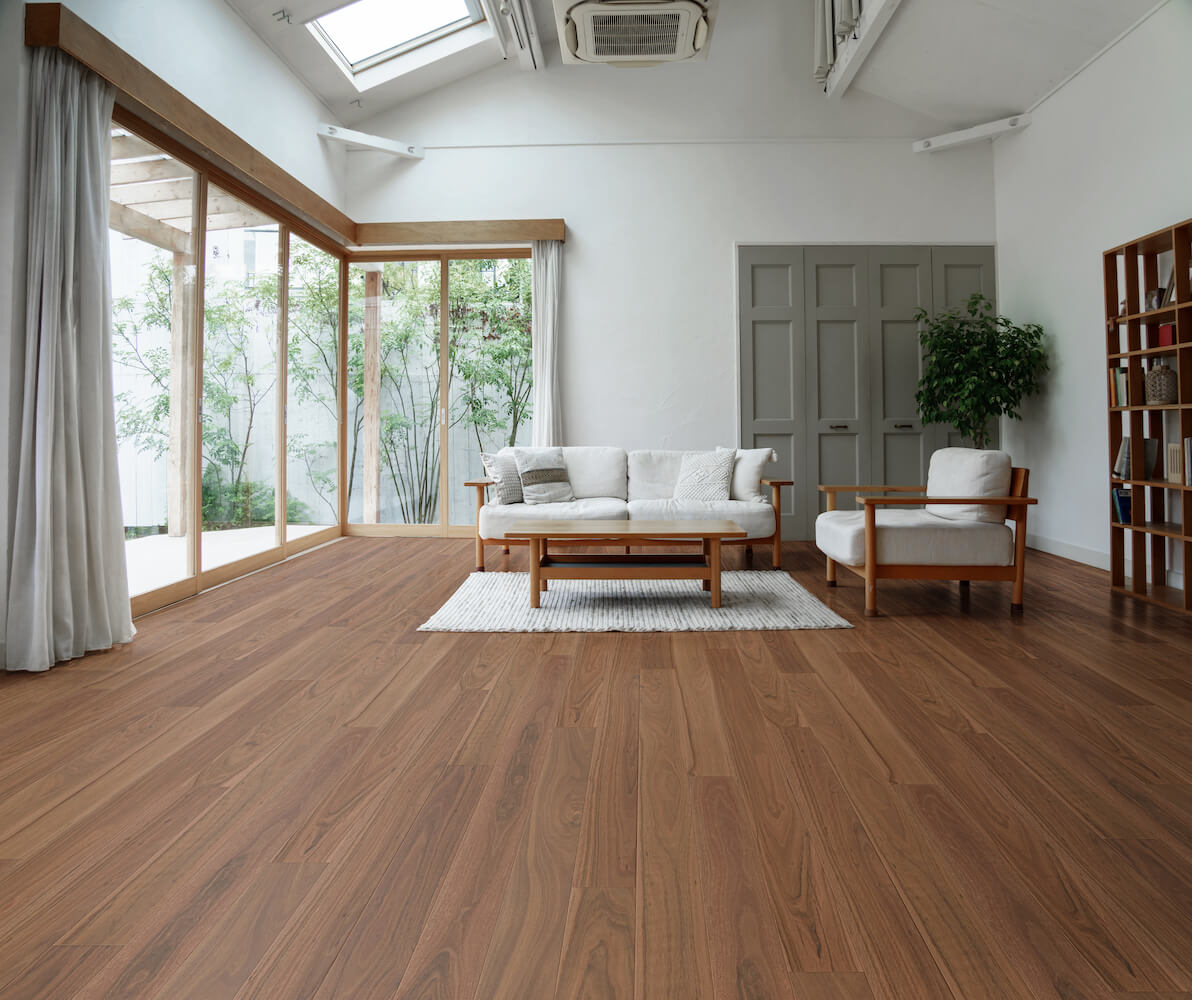
Empire OZ Engineered Timber Grey Ironbark
Timber flooring remains the benchmark for resale appeal. It has been used in Australian homes for generations. Because of that, it doesn’t date in the way some synthetic finishes can.
Resale and Refinishing
The biggest advantage of timber is its ability to be sanded and recoated. If you plan to sell in the future, you can refresh the surface before listing the property. That can significantly improve presentation. Few other flooring types offer that flexibility.
Wear in Family Homes
Timber is durable, but it isn’t immune to wear. The protective coating on top of the timber takes the daily impact. In busy households with kids and pets, surface scratches and dents are more visible over time. That doesn’t mean timber is unsuitable for family homes. It simply requires realistic expectations. It also isn’t waterproof. Spills should be cleaned promptly to avoid damage.
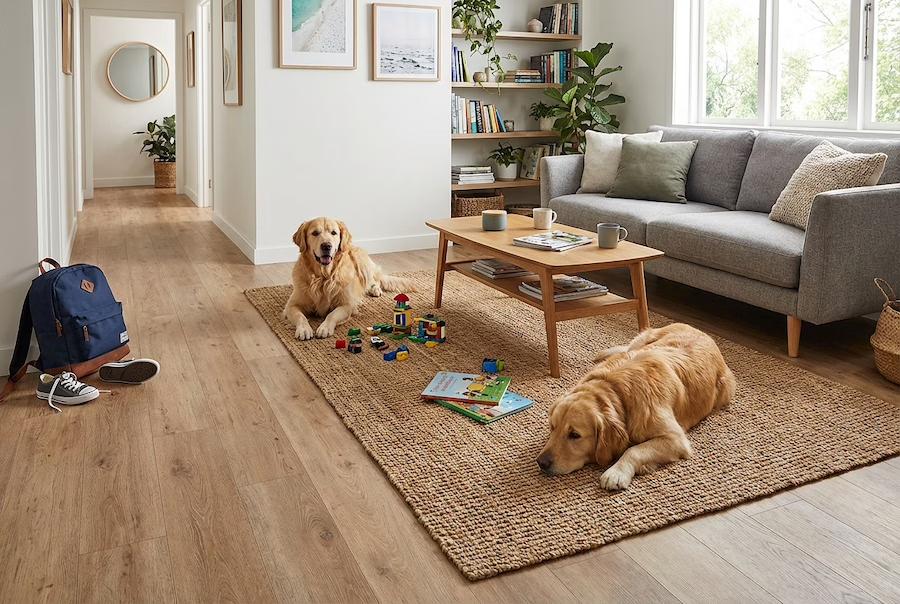
Where Timber Makes Sense
- Long-term ownership of homes
- Homes prioritising resale value
- Renovations where natural appearance is key
In extremely high-wear family environments, some households choose laminate for day-to-day durability and accept that timber, while beautiful, may show wear sooner.
Floating Floors vs Bonded Floors
One of the most overlooked factors in flooring selection is subfloor movement. Most modern Australian homes are built on concrete slabs. Over time, those slabs move slightly. It’s normal and often not noticeable in daily life.
The issue arises when rigid flooring systems are bonded directly to that slab. Tiles and glued vinyl have very little tolerance for movement. Stress builds over time, which can lead to cracking, lifting or joint stress.
Floating floors, including laminate and most hybrid products, are installed over underlay and are not bonded to the slab. They allow slight movement beneath the surface. This flexibility reduces long-term stress.
In Western Australia, especially, where slab construction is common, floating systems often perform better long-term. This is one of the most common preventable mistakes we see: choosing a rigid floor in a home that will inevitably move.
How Australian Climate and Sunlight Affect Flooring
One of the biggest factors people overlook when choosing flooring is climate. We deal with high heat, strong UV exposure, seasonal expansion, coastal humidity and dry internal environments. Flooring needs to tolerate all of that.
Direct Sunlight and UV Exposure
Large glass panels and open-plan designs are common in modern homes. While they look great, they expose the flooring to consistent UV light.
In hotter parts of Australia, temperature variation becomes a bigger issue. This is where lower-quality hybrid flooring tends to struggle. Thin boards with rigid locking systems and heavy wear layers can expand under heat stress. Over time, pressure builds in the joints, which can lead to lifting or locking system failure. This is one of the more common performance risks we see when people choose house flooring based purely on price rather than suitability.
Higher-quality products are engineered with better tolerances, but expansion gaps and proper installation are just as important as product choice. Almost every heat-related flooring issue we see could have been avoided with better product selection, realistic expectations and correct installation. That’s why comparing flooring options properly, rather than assuming one product is automatically the best flooring, makes such a difference long term.
Higher-quality products are engineered with better tolerances, but expansion gaps and proper installation are equally important. Almost every heat-related flooring issue we see could have been avoided with better product selection or installation.
Performance Comparison: How Each Flooring Type Stacks Up
| Performance Factor | Laminate | Hybrid | Vinyl | Timber |
|---|---|---|---|---|
| Scratch Resistance | Excellent | Very Good | Good | Moderate |
| Impact Resistance | Excellent | Good | Moderate | Moderate |
| Waterproof | No | Water Resistant | Yes | No |
| Handles Slab Movement | Excellent | Excellent | Moderate | Moderate |
| Noise Underfoot | Moderate | Good | Good | Moderate |
| Comfort Underfoot | Moderate | Good | Good | Moderate |
| Replace Individual Boards | Yes | Yes | Difficult | No |
| Long-Term Appearance | Very Good | Good | Moderate | Excellent (When refinished) |
| Resale Appeal | Good | Good | Moderate | Excellent |
Frequently Asked Questions
In high-traffic homes with kids, laminate flooring is often the most durable option for scratch and impact resistance. Its hard wear layer handles friction better than most alternatives. However, durability also depends on correct installation and product quality.
Luxury vinyl plank is usually the safest choice for homes with pets because it is waterproof. Pet urine can penetrate laminate joints over time and cause swelling, whereas vinyl is non-porous. Hybrid can also work well depending on the product specification.
All floating floors expand and contract slightly with temperature changes. Lower-quality hybrid boards are more prone to joint stress in hotter conditions. Proper expansion gaps, correct installation and choosing a stable product reduce this risk significantly.
Yes, but expectations should be realistic. Timber can show surface scratches sooner in high-wear environments. Its main advantage is that it can be sanded and recoated, which helps maintain long-term resale value.
Making the Right Decision
There is no single best flooring for Australian family homes. The right choice depends on your lifestyle, your environment and how long you plan to stay in the property. Laminate, hybrid and vinyl all perform exceptionally well when matched correctly to the home.
Most flooring issues aren’t product faults. They’re preventable problems caused by poor installation, low-grade materials or choosing a floor that doesn’t suit the way the space is actually used. When preparation and product selection are handled properly, long-term performance improves dramatically.
If you’re unsure which flooring suits your home, getting advice early can save time, money and frustration later. Get in touch with us today. We’re always happy to help you compare options and choose a floor that will still perform years from now.