

Thinking about bamboo flooring but unsure what it’ll actually cost you? You’re in the right place. Bamboo had its heyday in Australia about a decade ago, disappeared from a lot of showrooms, and is now quietly making its way back. Here’s the thing: a lot of the information about bamboo flooring costs online is either outdated or just plain wrong. Bamboo flooring has its pros and cons like any other flooring option, and understanding the real costs is an important part of deciding whether it’s right for your project.
I’ve been in the flooring game for over 25 years, and I spent part of that working with the biggest importer of bamboo flooring in Australia, so I’ve been across pretty much every product on the market. In this guide, I’ll give you real bamboo flooring prices, what drives them, where bamboo actually sits next to timber and hybrid, and the one thing most retailers get lazy about that ends up costing customers their warranty.
Bamboo Flooring Cost at a Glance
- Bamboo flooring prices typically range from $80 to $100/m² for materials alone
- Professional installation adds another $35 to $50/m² plus GST, in line with floated timber flooring
- Expect combined supply and install pricing of $120 to $160/m², depending on location and underlay
- Today’s bamboo is almost exclusively 14mm strand-woven. Horizontal and vertical have all but disappeared
- Most bamboo on the Australian market comes out of the same handful of Chinese factories, so quality between reputable suppliers is much closer than the price gap suggests
- Acclimatisation is non-negotiable. Skip it, and you’ll have problems, and your warranty won’t cover you

What Makes Bamboo Flooring Different?
The first thing worth knowing: bamboo isn’t a timber. It’s a grass. That matters because it has to be treated differently from a timber floor, both in how it’s installed and how it behaves once it’s down.
Modern bamboo flooring is made from moso bamboo (no, not the kind pandas eat, that gets brought up a lot), which is fast-growing and replenishes itself in two to five years compared to thirty or forty years for a hardwood like spotted gum. That fast growth cycle is what made bamboo so cost-effective during its peak, and it’s why bamboo is a genuinely sustainable choice rather than a marketing one.
Manufacturing is where the magic happens. Raw bamboo is sliced into thin strands, coated in adhesive, packed into a mould, and then compressed under serious pressure to form a dense solid block. That block gets sliced into planks and profiled. The compression is the whole game. It’s what takes bamboo from a natural Janka rating of around 7.5 (softer than Tassie oak) up to 16+ on the Janka scale in finished strand-woven form. That’s harder than spotted gum. Harder than blackbutt. Three times harder than a lot of oak floors.

One of the biggest misconceptions we still hear is that bamboo is a softer, budget alternative to timber. In reality, quality strand-woven bamboo sits at the harder end of the residential flooring market and often exceeds the hardness of species that cost considerably more.
There Used to Be Three Construction Methods
Years ago, there were three competing constructions: horizontal, vertical, and strand-woven. Horizontal and vertical were just pieces of bamboo laminated together. They looked alright, but they were soft and unstable. Once strand-woven hit the market, the other two were finished. It’s not even a conversation today. If someone’s selling you horizontal or vertical bamboo, you’re looking at old stock or a corner-cut product.
Three Natural Colours
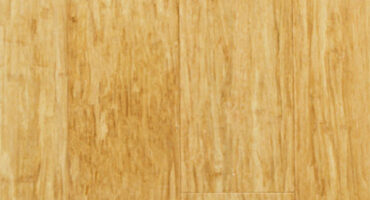
The other thing worth knowing about colour: bamboo’s three natural colours (natural, champagne, and coffee) are all produced from the same bamboo. The darker the colour, the more carbonisation (cooking) it’s had. Carbonisation doesn’t affect structure or price. It’s purely a colour treatment.
Bamboo Flooring Prices: What You’ll Actually Pay
Here’s where bamboo gets interesting compared to other flooring categories. With hybrid or laminate, you’ve got clear entry, mid, and premium tiers with genuine product differences. Bamboo doesn’t really work that way anymore.
When bamboo was at its peak, there were 10mm and 12mm budget products, hot-pressed versus cold-pressed, and dozens of factories. Today, almost all bamboo on the Australian market is 14mm cold-pressed strand-woven, around 135mm wide and 1.85m long, made in China, and a lot of it is coming out of the same factories. Different suppliers are importing similar products at different price points.
So when you see different prices across brands, you’re mostly paying for the importer’s overheads, after-sales support, and how close their warehouse is to you (freight matters).

Our Three Bamboo Ranges
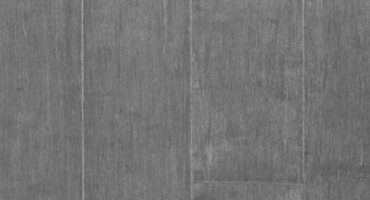
Entry Level Pricing
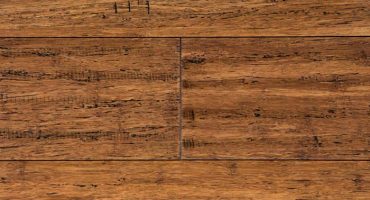
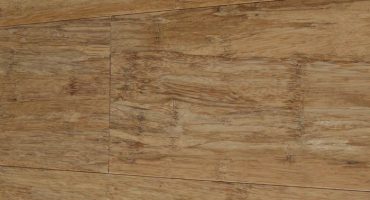
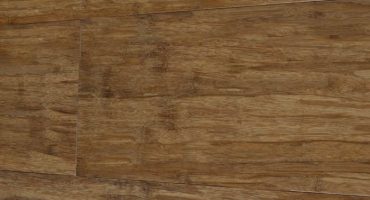
Recommended Product: Clever Choice Ultimate Bamboo
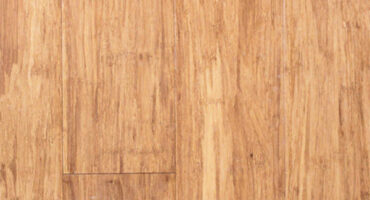
Mid-Range Pricing
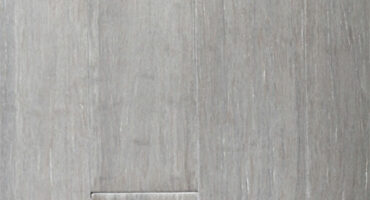
Recommended Product: Eco Flooring Systems BT Bamboo
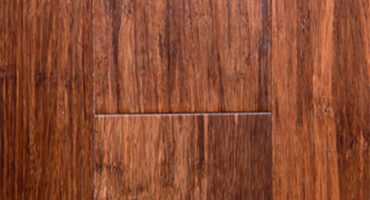
Premium Pricing
Recommended Product: Premium Floors ARC Bamboo Australiana


I'll be straight with you. The product itself is much the same across these three ranges. They're all 14mm strand-woven, cold-pressed, and sourced from a small pool of reputable factories. What you're really choosing between is colour and after-sales backup.
Premium Floors, for example, has one of the best after-sales departments in the industry, so if something does go wrong, you've got real support behind you. A smaller importer with lower overheads can offer a sharper price, but if you need warranty support down the track, that matters. Pick the colour you love, and weigh your decision toward the supplier you'd trust if there's ever a problem.
Buy from a physical flooring store, and you're typically paying 20 to 50% more for the same product, and you're often not getting the depth of advice that comes with 25+ years of industry experience.
Janka Hardness: Why Bamboo Punches Above Its Price
This is the part most buyers don’t know. Modern strand-woven bamboo lands at 16+ on the Janka scale. Here’s where that sits next to common Australian timber:
- Strand-woven bamboo: 16+
- Ironbark: approximately 14
- Spotted gum: 10 to 11
- Blackbutt: 9 to 10
- Tasmanian oak: approximately 7.5
- European oak: 5 to 6
In some cases, bamboo is three times as hard as an oak floor at a fraction of the price. And there’s a second hardness advantage most people miss: bamboo is a solid product all the way through. With engineered timber, you’ve got a 3 to 4mm hardwood veneer on top of a softer plywood or hevea core, so when something heavy hits the floor, the wear layer is hard but the substrate underneath compresses. With bamboo, you’re getting 14mm of consistent 16+ Janka density top to bottom.
Key Factors That Drive Bamboo Flooring Price
Density (and how to spot a corner-cut product)
Two products can both say “14mm strand-woven bamboo” on the box and have wildly different amounts of bamboo packed into them. The compression ratio determines density, and density determines durability.
Here’s a simple test that tells you everything: weigh the box. A properly compressed strand-woven bamboo will come in at around 15kg per square metre. If a product is closer to 8kg per square metre, you’re getting roughly half the bamboo in the same 14mm thickness. That product will dent, fail, and embarrass everyone involved. The density should be around 1,000kg per cubic metre. If it’s 600kg, walk away.
Locking system
Today’s bamboo almost universally uses a drop-lock joining system. It was made for this product. Line the side up, drop it in, done. If a supplier is using a branded system like Unilin, there’s a royalty cost that is reflected in the price, but the practical difference for you is minor.
Freight and your location
There’s no real “regional surcharge” on bamboo itself. What you pay extra for in regional areas is freight to get the product to you. The same goes for installation: in metro centres, you’ve got competition between installers; if you’re in a regional town with one guy doing floors for a 600km radius, you’ll pay what he charges.
Underlay
Bamboo must be floated. There’s no glue-down option, and tongue-and-groove direct-stick bamboo was an abject disaster and doesn’t exist anymore. That means you need an underlay, which adds around $7/m² to your project on top of the flooring itself.
Bamboo vs Other Flooring Types
Here’s the honest positioning:
- Bamboo vs hybrid: Bamboo costs roughly 1.5 to 4 times more than hybrid. Hybrid wins on price and waterproofing; bamboo wins on natural feel and longevity.
- Bamboo vs laminate: Similar gap to hybrid. Bamboo is significantly more expensive, but you’re getting a solid natural product, not a print on fibreboard.
- Bamboo vs engineered timber: Bamboo sits at the low end of timber flooring prices, competing with the cheaper 2mm-veneer oak products. Mid and premium engineered timber is more expensive than bamboo.
- Bamboo vs solid timber: Bamboo is around 50 to 60% of the price of a solid hardwood floor.
- Bamboo vs vinyl planks: Same relationship as bamboo vs hybrid. Bamboo is more expensive but a fundamentally different product.
So is bamboo cheap? No. It sits at the bottom of the timber bracket, not the top of the laminate bracket. But pound-for-pound on hardness and longevity, it’s one of the best-value natural floors on the Australian market.

Installation, Acclimatisation and the Warranty Trap
If you take one thing away from this guide, make it this: bamboo must be acclimatised before installation. Not next-day. Not “we’ll let it sit for a few hours.” Properly acclimatised, in the room it’s being installed in, for a meaningful stretch of time.
Bamboo expands and contracts more than timber does. For every 5% shift in moisture content, a strand-woven bamboo plank will move roughly 1mm per 100mm of width. That’s two and a half times what an engineered timber with a heavy core moves, and more than double what laminate moves. If you don’t let the product settle into your home’s environment before nailing the trim in, you’re locking that movement into a finished floor.
Toowoomba is the example I always come back to. Up on a mountain range, harsh climate swings. Almost every flooring retailer in Toowoomba stopped selling bamboo early on because they kept getting callbacks for cupping and crowning. One retailer made every customer take the bamboo home and let it sit in the room for six weeks before installation. He never had a single complaint. The product wasn't the problem. Lazy salespeople who wanted to install same-day were the problem.
No Acclimatisation
Most bamboo warranty claims I’ve inspected over the years came back to the same root cause: no acclimatisation. Ignoring supplier installation guidelines, including expansion break requirements, voids your warranty. If your retailer specifies an expansion break and you tell the installer to skip it, you’re on your own.
DIY vs professional installation
The drop-lock system makes bamboo one of the more DIY-friendly natural floors. A handy homeowner who’s prepared to acclimatise properly and follow the installation guide can absolutely lay bamboo themselves. Professional installation runs $35 to $50/m² plus GST, the same as floated timber.
What You Can DIY To Save Money
Anything you can handle before the installer arrives, you’re not paying labour for. Moving furniture, pulling up existing carpet and underlay, lifting skirting boards, and cleaning the subfloor: easy wins. Just don’t do anything that affects the subfloor itself (levelling, moisture barriers) unless you know what you’re doing.
Red Flags and How to Buy Smart
- Too cheap to be true. As covered above, weigh the box. Light bamboo is corner-cut bamboo.
- Sample first. Tone varies between suppliers. “Coffee” from one supplier won’t be identical to “coffee” from another. Order samples before you commit.
- Read the warranty document, not the ad. A 25-year warranty headline means very little until you read what’s actually covered. I’ve seen warranty documents that effectively void coverage the moment the product comes out of the box. Get the full document and read it.
- Keep a spare box. With any natural product, hold a box back from the batch you bought. If you ever need to repair, you’ll have a matched product from the same dye lot.
- Wastage and contingency. Add 7 to 10% for wastage on the flooring itself, and budget around another 10% on top for trims and incidentals.
Has Bamboo Earned Its Place?
After 25+ years watching products rise, fall and recover, my honest take is that bamboo is right now where laminate was about 15 years ago: quietly working its way back after being oversold and burned during its peak. The market’s smaller, the suppliers left are the serious ones, and the product itself has never been better.
It’s sustainable, it’s harder than most timber on the market, and at $120 to $160/m² installed, it’s genuinely good value for a solid natural floor. Treat it right (acclimatise it, install it to spec, and don’t cheap out on a corner-cut box) and you’ll have a floor that lasts generations.

FAQs
Bamboo flooring typically costs $80 to $100/m² for materials and $120 to $160/m² supply and installed, including underlay.
Yes. Bamboo is roughly 50 to 60% of the cost of solid hardwood, and sits at the low end of timber flooring overall.
Bamboo is significantly more expensive than laminate, typically 1.5 to 4 times the price, because it’s a solid natural product rather than a printed fibreboard.
Professional installation runs $35 to $50/m² plus GST, in line with floated timber flooring. Add underlay at around $7/m².
Yes, if you want a natural, sustainable, very hard floor at the low end of timber pricing. It’s one of the best value natural floors on the Australian market.
Properly installed and maintained, indefinitely. The aluminium oxide coating is built for light cap-back refinishing rather than full sanding.
Yes. As a natural, sustainable floor it adds appeal in the same way timber does.
Entry-pricing 14mm strand-woven bamboo from reputable suppliers. At OFS, that’s the Clever Choice Ultimate Bamboo range.
Premium-pricing 14mm strand-woven bamboo from suppliers with strong after-sales backing, like Premium Floors ARC. Worth noting: the products are very similar. You’re often paying for support, not a different floor.
Absolutely. It eclipsed horizontal and vertical bamboo for a reason. It’s stronger, more stable, and more durable. There’s no reasonable case for the older constructions anymore.