





Hardwood flooring problems are rarely caused by the timber itself. In most cases, failures stem from moisture, subfloor preparation conditions, and shortcuts taken during installation, especially on concrete slabs.
Timber is a living material. It absorbs and releases moisture, moves with the seasons, and reacts to its environment. When those basics aren’t respected, issues like gapping, cupping, lifting, or delamination can occur. The good news is that most of these problems are avoidable.
In this blog, I’ll break down the most common causes of hardwood flooring problems in Australian homes, including slab moisture, acclimatisation mistakes, glue-down failures, and everyday wear. I’ll also explain where engineered timber helps, where it doesn’t, and what actually needs to happen under the floor to get a timber installation right the first time.
Quick Summary
- Most hardwood flooring problems are caused by site conditions and installation errors, not faulty timber.
- Moisture is the biggest risk. Moisture rising through concrete slabs, hidden leaks, or damp sites is the leading cause of movement and damage.
- Acclimatisation matters. Skipping it is one of the fastest ways to create gaps and stress in timber floors. I explain the correct process for acclimatising timber flooring in this guide.
- Concrete slabs need proper preparation. Levelling and moisture protection must be done before the timber goes down.
- Glue-down systems only work when used as a complete system, including the correct moisture barrier and adhesive.
- Engineered timber is more stable, but not immune. It’s still a real timber product and still responds to moisture and environmental changes. If you’re comparing options, this breakdown of engineered timber flooring pros and cons explains where it shines and where its limitations still apply.
- Prevention is always cheaper than repair. Spending more upfront on preparation is far cheaper than fixing a failed floor later.
Environmental Moisture: The Real Cause of Timber Movement
Timber expands when it absorbs moisture and shrinks when it dries out. This isn’t like laminate swelling or hybrid peaking; this is natural timber behaviour. You can’t change that. You can only prepare for it.
What I see over and over again is:
- Boards cupping
- boards crowning
- Seasonal gaps opening between boards
- Boards pushing tightly together and losing their micro-bevel
- Slight ridging or unevenness across a wide raft
- In bad cases, peaking where boards have nowhere to expand
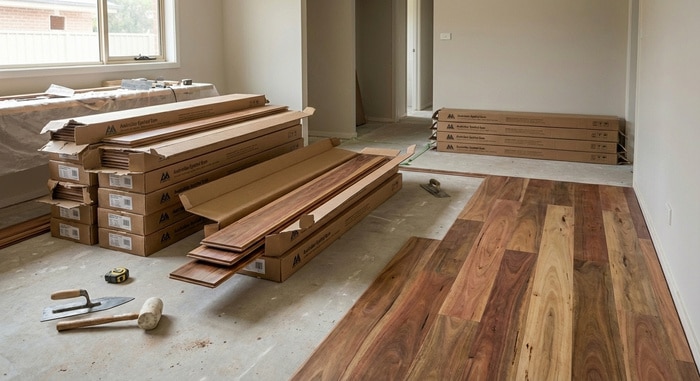
A lot of this comes down to whether the product is acclimatised before installation.
Why Acclimatisation Is the Most Important Step in Timber Installation
If you skip acclimatisation, you are rolling the dice.
Timber needs time to settle into the humidity and temperature of your home. Every climate is different; coastal, inland, tropical, dry, winter-heavy, air-conditioners, it all matters.
Engineered timber is more stable than solid timber, but it is still a timber product. It still needs acclimatisation. The stability helps reduce movement; it doesn’t eliminate the need for proper preparation.
The best results come when:
- The timber is brought into the home
- The packs are opened
- The boards are allowed to breathe
- The flooring sits for a healthy period in the actual living environment
- Some regions need a few days.
- Some need a week.
- Some extreme environments need longer.
For a deeper explanation of why this step isn’t optional, read this guide on acclimatising timber flooring:
Floating Engineered Timber Floors: Tanking the Floor
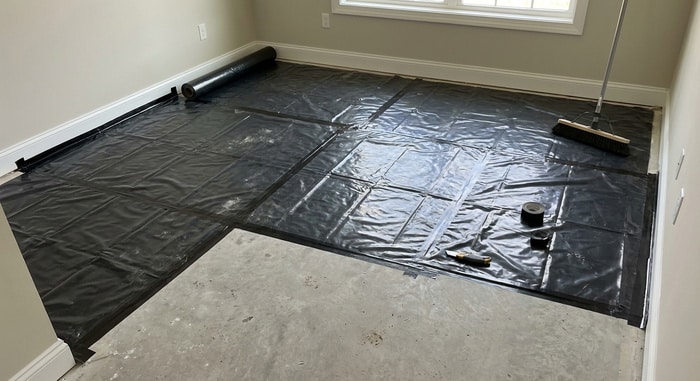
If you’re installing engineered timber as a floating system (just like laminate), you treat the subfloor the same way, especially on concrete slabs.
- Put down builder’s plastic
- Run it up the wall 100 mm
- Install your underlay
- lay your boards
- Trim the excess plastic at the end
This “tanks” the area and prevents moisture from evaporating from the slab into the board joints.
Use both the membrane and builder’s plastic.
Direct-Stick Timber: Moisture Barriers Matter
If you’re gluing timber directly to the floor, the preparation changes, and mistakes here are among the worst failures I see.
- Test the moisture in the slab
- Apply the correct rolled-on moisture barrier
- Use the adhesive that pairs with that barrier
These products are designed, tested, and approved as a system. Change one part, and you compromise the whole install.
Scratching, Dents and Everyday Wear
Timber scratches. All of it.
- Wearing shoes inside
- Dragging furniture
- No felt pads
- Kids’ toys
- Pet claws
- Sand and grit from outside
A soft broom and felt pads go a long way.
Scratches and Dents
For scratches and everyday damage to timber and engineered timber flooring, our guide on repairing and replacing damaged timber flooring explains what actually works in the real world. Minor surface scratches can often be disguised with oil-based treatments, while deeper gouges are usually best handled with coloured wax repair kits rather than attempting to remove boards.
In many cases, sanding and recoating the floor is the most practical long-term fix, especially for direct-stuck timber, whereas individual board replacement is rarely worth the risk unless handled by a professional.
Rare Problem: Veneer Delamination (Product-Specific Issue)
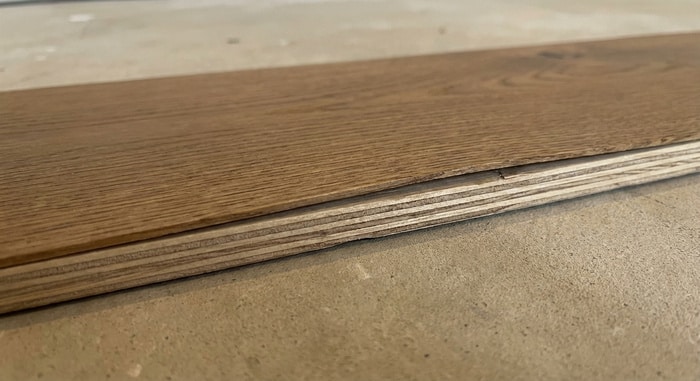
This issue applies to layered timber products and is extremely rare. Every time I’ve seen it, the cause has been site-related moisture, not a product fault.
I once measured moisture readings climbing from 10% to over 70% near a wall. The issue turned out to be a burst pipe behind that wall.
Veneer delamination is almost always caused by:
- Broken pipes
- Drainage issues
- Flooding
- Persistent humidity
- Unsealed slabs
Seasonal Gapping vs True Failure
Normal behaviour:
- Gaps open in winter
- Gaps close in summer
Actual failure:
- gaps only in certain rooms
- movement doesn’t reverse seasonally
- boards lift or show stress
How to Prevent Timber Flooring Problems
- Acclimatise properly
- Follow the installation guide exactly
- Tank floating floors
- Use correct moisture barriers for glue-down installs
- Test slab moisture
- Leave correct expansion gaps
- Use felt pads and rugs
- Control indoor humidity where possible
Do all of that, and timber becomes one of the most reliable, longest-lasting floors on the market.